Chicken Supa: Seven-Hour Italian Brodo Style
The Story: Mastering Traditional Bosnian Chicken Supa and Italian Brodo Technique
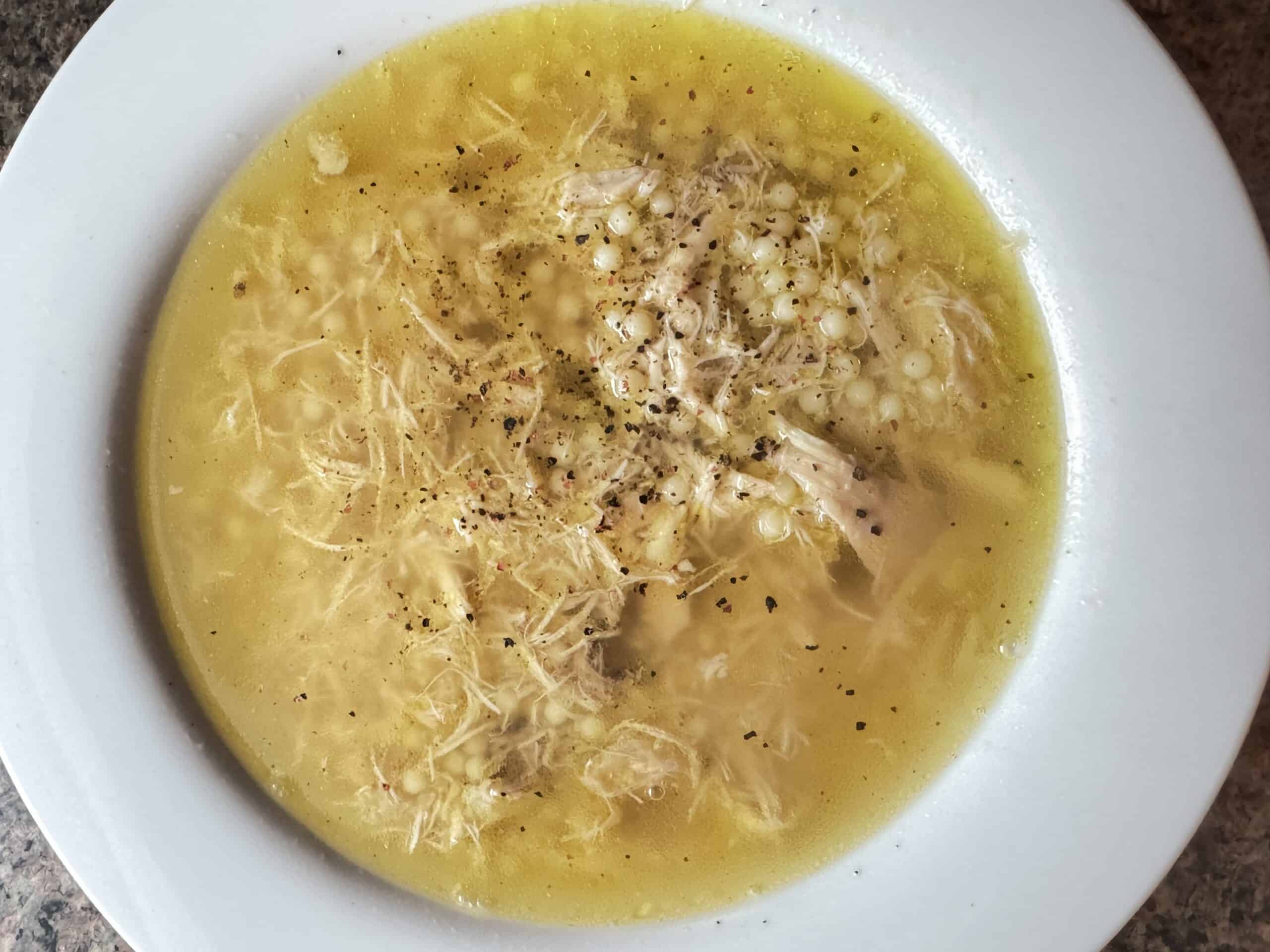
In Bosnia, Supa is the traditional opening ritual of every meal, a restorative broth meant to “open the stomach.” I remember growing up, almost every ručak (lunch but usually the biggest meal of the day and served around 2pm) started with supa. However, this is not a standard forty-minute soup. By applying the technical rigor of an Italian Brodo, whole organic chicken from Harrison’s Poultry Farm in Glenview into a seven-hour masterclass in deep flavor extraction. We are chasing a specific result: a broth that is rich, deeply savory, and velvety. Using Acini di Pepe adds a refined, bead-like texture that stays suspended in the liquid, bridging the gap between the patience of the Balkan stovetop and the precision of Italian culinary mechanics.
Order of Operations
The Extraction | 7 Hours Out
Place one whole organic chicken from into a large stockpot. Cover with cold, filtered water. Bring the temperature up slowly. While we aren’t chasing transparency, we still skim the initial “scum” to ensure the fat profile remains clean and the flavor is focused.
The Infusion | 6 Hours Out
Introduce the aromatics: halved onions with the skins left on, large chunks of celery, and whole parsnips. Do not add salt yet. The goal for the next five hours is a low-energy thermal exchange where the water pulls every ounce of marrow and collagen from the bird’s carcass.
The Refinement | 1 Hour Out
Strain the entire pot through a fine-mesh sieve. Discard the spent vegetables as they have given their all to the liquid. Set the chicken aside to cool slightly, then hand-shred the meat. Return the deep, golden broth to a clean pot on the burner.
The Service | 15 Minutes Out
Bring the strained broth back to a boil. Add the Acini di Pepe directly into the liquid. As the pasta cooks, it releases starch, slightly thickening the broth into a silky, unctuous elixir. Once the pasta is al dente, fold the shredded chicken back into the pot. Season with sea salt and black pepper at this final stage.
The Parts
The Protein 1 whole organic chicken
The Aromatics 2 Yellow onions (halved, skin-on), 4 Carrots, 3 stalks Celery
The Starch 1 cup Acini di Pepe pasta
The Liquid 8 quarts Cold filtered water
The Finish To taste Sea salt and Black pepper
The Technique
1. Thermal Extraction vs. Speed A seven-hour simmer is about breaking down connective tissue. Even without extra bones, the Harrison’s bird has enough structural integrity to provide a rich mouthfeel if treated with time. High heat is for searing; low heat is for soulful extraction. By keeping the pot at a sub-simmer for the majority of the day, you prevent the fat from becoming greasy and instead allow it to integrate into a cohesive, savory liquid.
2. Starch Integration: The Flavor Sponge Cooking the Acini di Pepe directly in the Brodo is a deliberate choice for maximum flavor saturation. Pasta is a sponge; by boiling it in your seven-hour chicken extraction, the pasta absorbs that local Harrison’s flavor from the inside out. The starch released during this process is what gives your Supa its characteristic heaviness and velvety texture, which is the hallmark of a proper mid-afternoon Ručak.
Damir's Pour 🍷
The Balkan Choice | Malvazija Istriana If you want to experience the dish as intended, seek out this Croatian white. It leads with notes of crisp green apple and apricot, moving into a floral acacia aroma, and finishing with a distinct hint of salted almonds. Its natural salinity acts as a mineral “seasoning” that draws out the sweetness of the seared scallops.
The Accessible Choice | Sauvignon Blanc (Sancerre Style) For a bottle you can find at any local shop, reach for a high-acid Sauvignon Blanc from the Loire Valley. These wines are famous for their “flinty” or stony finish and grassy aromas, which act as a direct flavor bridge to the ramps and spring peas. The high acidity functions as a liquid lemon squeeze, cutting through the butter-basted richness of the protein.
The Middle Ground | Albariño If you want the saltiness of the Balkan choice but the bright citrus of the Sauvignon Blanc, look for a Spanish Albariño. These vines are grown along the coast and “breathe” in sea salt, resulting in a wine that is essentially designed by nature to be paired with seared shellfish.
Master More Traditional Bosnian and Global Recipes
If you appreciate the patience required for this seven-hour extraction, you will respect the mechanical discipline of a Sarajevo Sarma. For a study in high-heat precision, explore my manual for Seared Scallops with Ramp Purée.