Sarma: Bosnian Stuffed Fermented Cabbage Leaves
The Story: Sarajevo Sarma
Sarma was my favorite meal growing up; it was a staple of my childhood, and it is a ritual of patience and pre-cook prep work (mise en place). In Bosnia, we typically make these using stuffed grape leaves or pickled cabbage leaves, with the latter being my personal favorite because of that unique flavor and tang the kiseli kupus (fermented cabbage) provides. Walking through Baščaršija (old town) in the winter, you smell that specific oak-smoke from the drying rooms – a scent that defines Bosnian home cooking. My aunts in Livno had their own smokehouse in the backyard, and the smell is absolutely divine. Sarma requires patience and is a dish that honors the “long way,” while showing devotion to technique so that the final product is its greatest form to the people sitting at your table. The long, slow simmer in Sarajevo is a quiet ritual that turns a handful of rice and meat into the ultimate armor against the winter wind.
Order of Operations
The Filling | 5 Hours Out
Sauté finely minced onions and finely grated carrots in a small amount of beef fat or oil until they are fully translucent and soft. The carrot must disappear into the mixture to provide a structural sweetness without raw texture. Combine the ground chuck and veal in a large bowl with the cooled onion-carrot base, garlic, a generous handful of finely chopped fresh parsley, and par-cooked medium-grain rice. Rest the mixture in the refrigerator for at least two hours to allow the proteins to bind and the sweet paprika to season the meat thoroughly.
Cabbage Architecture | 4 Hours Out
Separate the leaves from the sour head, keeping them whole and intact. Shave the thick central rib of each leaf with a sharp paring knife until it is flush with the surrounding greenery. This mechanical thinning makes the leaf flexible enough to form a tight wrap that won’t snap under pressure.
The Structural Roll | 3.5 Hours Out
Place the filling (approx. 1/4 cup) at the base of the leaf and roll forward once. Fold the sides inward tightly and continue rolling to the end. Lock the seal by using your thumb to tuck the loose leaf ends deep into the center of the meat core.
The Long Braise | 3 Hours Out
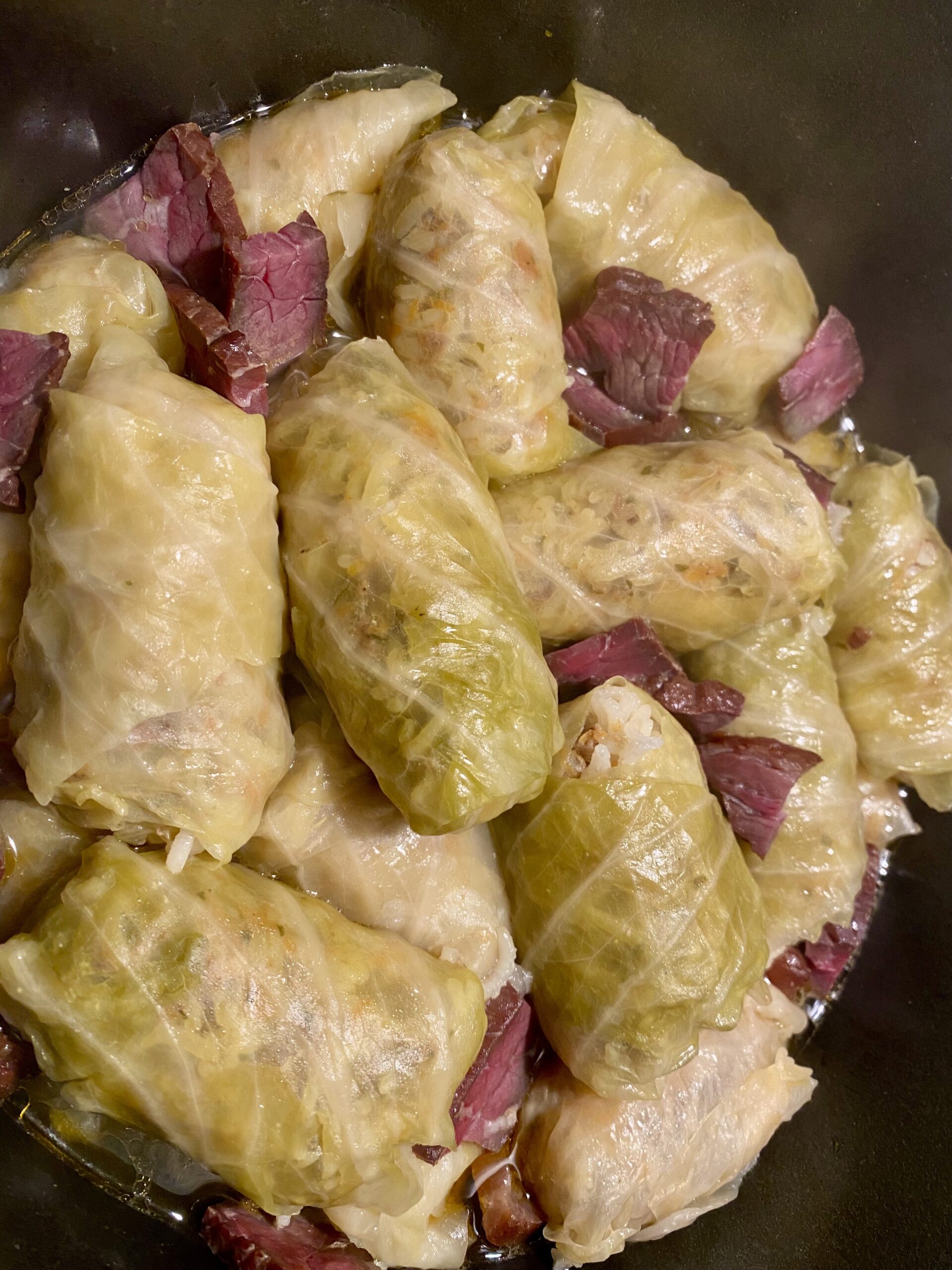
Layer the pot floor with chopped cabbage trimmings and sauerkraut to act as a protective barrier. Place a large piece of Suho Meso or a smoked rib at the very bottom, then pack the Sarma in tight concentric circles, seam-side down. Cover with beef stock or water until the liquid sits two inches above the rolls, weigh down with an inverted plate, and simmer on low for 3 hours.
The Parts
The Protein: 1 lb ground chuck, 1 lb ground veal, and 12 oz Suho Meso (Bosnian smoked beef) or smoked beef ribs. I get my Suho Meso from Fresh Farms, and it’s made by Brother & Sister Food Services, a Balkan style smokehouse located in the US, in Pennsylvania. Veal is a vital component in this dish, as it adds a lighter texture to the dish, but since it’s a more difficult product to find, a good 80/20 beef is acceptable.
The Wrap: 1 large head of Kiseli Kupus (sour cabbage)
The Bulk: 1 cup medium-grain white rice (Kočanski style), par-cooked in salted water for 6 minutes to control final hydration.
Aromatics and Spices: 1 large yellow onion, 2 medium carrots (finely grated), 1 bunch fresh Italian parsley (finely minced), 3 cloves garlic, 1.5 tbsp sweet paprika, and black pepper.
The Liquid Base: 5 cups beef stock or water
The Technique
1. Managing Rice Hydration
Par-cooking the rice until the core is still firm allows you to control the final expansion inside the cabbage. This prevents the rice from absorbing the meat’s natural juices during the long braise.
ON THE BURNER: By controlling the hydration, the interior of the Sarma stays tender and juicy. Raw rice often creates a dry, compressed meatball because it aggressively “robs” the ground meat of its moisture before the cabbage can tenderize.
2. The Rib Shave and Flatten
Hold the leaf flat and plane the central vein horizontally with your knife to remove the bulk. The central rib refuses to soften at the same rate as the rest of the leaf. Shaving it ensures the leaf is pliable enough to respond to the “thumb-tuck” seal without snapping.
ON THE BURNER: The central rib is high in cellulose and refuses to soften at the same rate as the rest of the leaf. If you don’t plane it flush, the roll will have a “crunchy” center that disrupts the melt-in-your-mouth texture of the braised meat.
3. The Sacrificial Layer (Zero-Waste)
Chop the unusable inner leaves and rib trimmings and spread them in a 1-inch layer at the bottom of the Dutch oven.
ON THE BURNER: This layer serves as a “heat shield” that protects the primary rolls and the Suho Meso from direct contact with the pot’s floor, preventing scorching during the long simmer.
4. The Smoky Reduction
Place an inverted, oven-proof plate on the rolls to keep them stationary during the simmer. Maintain a very low, steady heat to emulsify the rendered beef fats from the Suho Meso, the sugars from the sautéed carrots, and the herbal notes of the fresh parsley into the stock. The starches from the rice contribute a subtle thickening, resulting in a broth that is clear, deeply smoky, and intensely savory. If the liquid level drops below the weighted plate, top it off with a splash of hot water.
Master More Traditional Bosnian Recipes
Now that you’ve mastered the long-form braise of the Sarma, you can apply similar starch-emulsification techniques to a quicker stovetop meal. Explore the Traditional Bosnian Grašak here to see how we use potatoes instead of rice to build a silky broth.
Damir's Pour 🍷
The Balkan Choice | Žilavka (Herzegovina) A high-acid, mineral-heavy Žilavka is the Sarajevo connoisseur’s choice. Its earthy undertones match the fermented cabbage and the intense smoke of the Suho Meso.
The Accessible Choice | Syrah / Shiraz Look for a Syrah with a peppery, smoky profile. The dark fruit and bold spice will mirror the paprika and smoked beef without being overwhelmed by the cabbage’s acidity.