Bosanski Grašak
The Story: Traditional Bosnian Beef and Pea Stew (Grašak)
Grašak is the meal that actually sustained my childhood. In a Bosnian household, this isn’t a project or a specialized event; it’s the quiet, reliable ritual of a Tuesday night dinner. This recipe is exactly what my mother made—a humble stovetop braise that relies on the natural sweetness of carrots and the patience of a slow simmer. The smell of onions softening in a heavy pot and the predictable comfort of a meal made the “long way” are the only things that matter here. It is light, soul-warming, and rooted in the simplicity of the Bosnian kitchen.
Order of Operations
The Foundation | 2 Hours Out Heat a high-quality olive oil in a heavy Dutch oven over medium heat. Introduce the sliced carrots first on their own, sautéing them to jumpstart the release of their natural oils and beta-carotene. After one minute, add the finely minced yellow onion. Sauté the mixture until the onions are translucent and the carrots have softened into the fat, creating a golden aromatic base.
The Braise | 1.5 Hours Out Cube 2 lbs of marbled chuck roast into 1-inch pieces and add them directly to the vegetable base. Sauté the meat briefly with the aromatics just until the exterior loses its raw color and begins to integrate with the carrot sugars. Add six cubed yellow potatoes with the skin left on and pour in six cups of beef bone broth or water. Bring the liquid to a boil, then immediately drop to a low simmer and cover the pot.
The Tenderizing | 15 Minutes Out Allow the stew to simmer for roughly 75 to 90 minutes. You are looking for the moment the beef becomes tender and the potatoes begin to slightly break down at the edges, which naturally thickens the broth through starch release. Test the beef with a fork to ensure it has reached the proper “fork-tender” texture.
The Finish | 5 Minutes Out Turn off the heat entirely. Stir in one bag of high-quality frozen peas and let them sit in the residual heat of the pot for three to five minutes. This ensures the peas are heated through while maintaining their bright green color and structural snap.
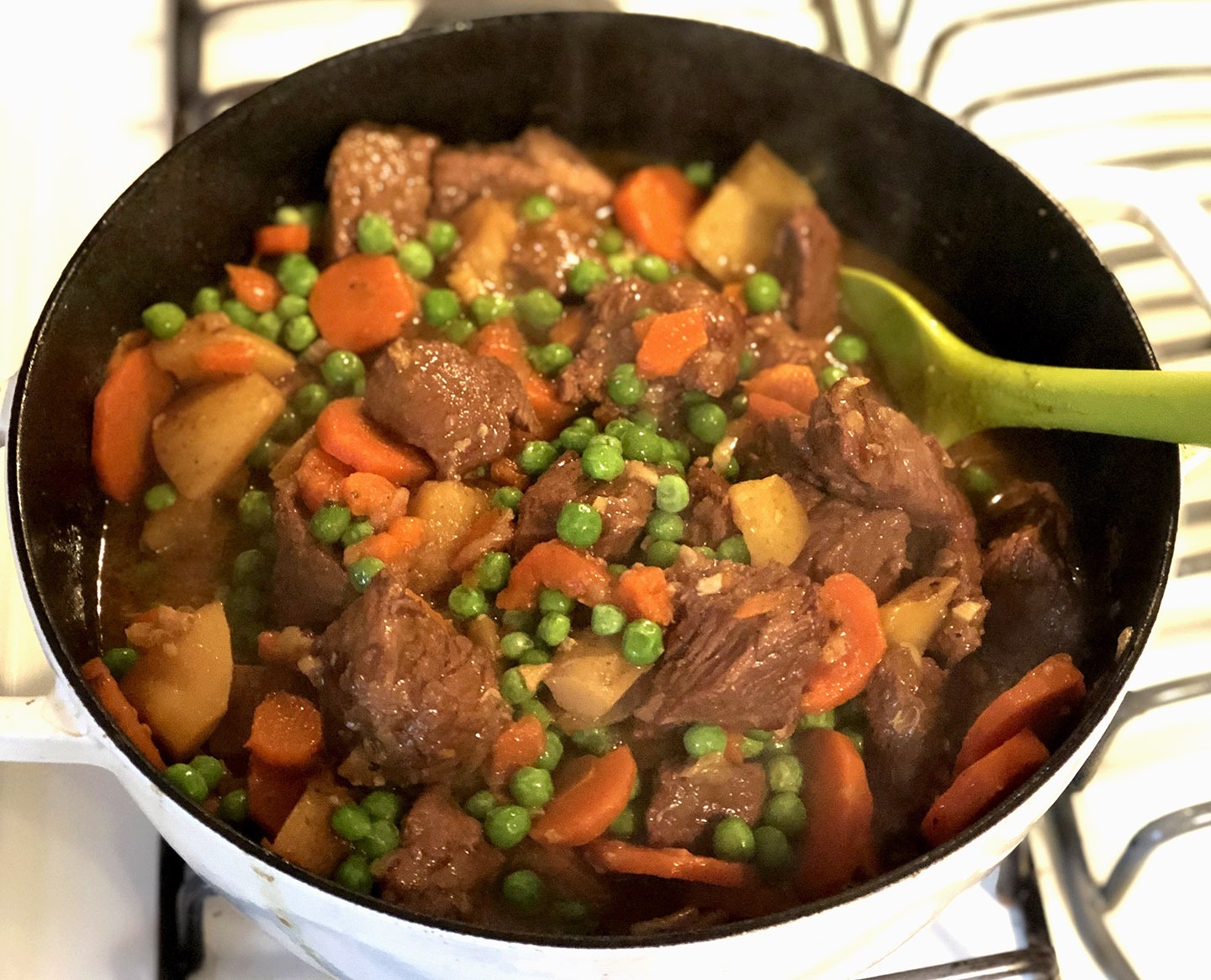
The Parts
The Protein: 2 lbs of marbled Chuck Roast, cubed into 1-inch pieces.
The Vegetables: 1 large yellow onion, 4 carrots (sliced into rounds), and 6 yellow potatoes (cubed, skin-on).
The Finish: 1 bag of high-quality frozen peas.
The Liquid: 6 cups of beef bone broth or water.
The Seasoning: Sea salt, black pepper, and a teaspoon of sweet paprika.
The Technique
1. Sautéing for Aromatic Development In this traditional version, the flavor depth comes entirely from the quality of your aromatics and how you treat them in the first ten minutes. Who doesn’t love the smell of sautéing onions and carrots? I like to add the carrots first on their own with some really good olive oil, and then add the onions about a min or so later.
ON THE BURNER: By adding the carrots to the olive oil before the onions, you are performing a fat-based extraction of beta-carotene. This creates a foundational sweetness and a natural golden hue for the broth that cannot be replicated if the vegetables are added simultaneously.
2. The Light Sear (Integration over Bark) We are prioritizing a cohesive sauce over an aggressive crust.
ON THE BURNER: A light sear on the beef cubes initiates the Maillard reaction—creating savory depth—without building a tough protein barrier. By browning the meat with the fat-conditioned aromatics, we ensure the juices emulsify with the carrot sugars before the liquid is added, ensuring a integrated sauce rather than a watery broth.
3. Mechanical Starch Emulsification We strictly avoid using flour-based thickeners (roux) to keep the flavors clean and seasonal.
ON THE BURNER: By simmering the skin-on potatoes for 90 minutes, the starch slowly leaches out into the liquid. As the edges of the potatoes soften and fray, they act as a natural emulsifier, providing a silky body to the stew.
4. Maintaining Color and Snap (Residual Heat) Overcooking the peas is the most common mistake in home cooking.
ON THE BURNER: High, aggressive heat kills the color and texture of the peas, making them gray and mushy. By turning the burner off and letting them sit in the residual heat of the Dutch oven, you bring them to the perfect temperature while keeping them bright green and snappy. This provides the final visual and textural lift the braise needs.
Master More Smoked and Traditional Bosnian Recipes
Once you have established the foundation with this stovetop version, you may be ready to introduce wood-fire and smoke to the process. To see how real-fire char and homegrown heat transform this profile, explore my technical manual for Not Your Mama’s Smoked Beef Stew. If you are looking for a different study in the long braise, you can also head to my post on Sarajevo Sarma.
Damir's Pour 🍷
The Balkan Choice | Žilavka (Herzegovina) A crisp, white Žilavka is the standard match for a traditional Grašak because it respects the lighter, stovetop profile of the dish. Its mineral acidity and stone-fruit notes highlight the natural sweetness of the carrots and peas rather than competing with them.
The Accessible Choice | Pinot Noir A light-bodied Pinot Noir with bright red fruit notes is the ideal “Old World” alternative. It provides just enough tannin to complement the beef without masking the delicate, fresh snap of the residual-heat peas.